Blog Post:
BY Liberty Fence Co.
If you have lived near the junction of I-29 and I-94 for any length of time, you know our winters show no mercy. The wind sweeps across our flat terrain, and the freezing cold attacks every outdoor structure you build.
Whether you are adding a backyard deck in Deer Creek or building a custom outdoor living space in The Wilds, the frozen ground will test your framing. Homeowners often ask how deep they need to dig their deck footings and structural posts to survive a Red River Valley winter. The short answer involves local building codes, but the real answer requires an understanding of our local dirt.
The Science of Clay Soil and Frost Heave Near the Red River
Building in our area is different from building in dry, sandy states. We deal primarily with heavy red clay and dense brown dirt. This type of soil holds a massive amount of water during the wet spring months. When freezing temperatures hit Fargo and Moorhead, that trapped water turns into ice lenses.
Engineers who study soil mechanics note that freezing water expands by roughly nine percent. In dense clay, this expansion creates a powerful upward hydraulic force known as frost heave. If your footings sit above the frost line, the freezing ground acts like a hydraulic jack. It will slowly lift your deck, porch, or structural support posts right out of the dirt.
Over a few seasons, this upward pressure twists wood framing and snaps structural joints. You might notice doors jamming inside your house if a ledger-attached deck starts heaving.
Cass County Rules: Meeting Frost Line Requirements
Local building departments do not guess when it comes to freezing depths. In Fargo, West Fargo, and surrounding Cass County, the legal frost line depth generally sits between 54 and 60 inches below grade. This means your concrete footings must extend at least four and a half to five feet into the earth.
Digging five feet down ensures the base of your concrete pier rests in warmer soil that never freezes. When the bottom of the footing sits below the frost line, expanding ice near the surface cannot push the structure upward. Getting an official inspection before you pour concrete is a smart move.
An inspector will check your hole depth, ensuring your outdoor living space remains safe and flat for decades. To see the exact city specifications and structural diagrams, you can review the official Fargo deck footing guide.
How Different Neighborhoods Handle the Freeze
Different parts of our metro area present unique challenges depending on soil moisture and wind exposure. Here is how local conditions impact outdoor construction across the region:
| Neighborhood or Area | Typical Terrain & Soil | Primary Structural Threat | Recommended Defense |
|---|---|---|---|
| Lost River (Horace) | Flat, heavy brown dirt | Deep frost penetration | 60-inch concrete piers with bell bottoms |
| Tessa Terrace (Moorhead) | Clay pockets, strict HOA rules | Frost heave and visual tilt | Precision digging to pass strict HOA standards |
| Southdale Farms (Horace) | New construction, open ground | Severe wind and wet soil | Deep footings plus heavy-duty post brackets |
| Near West Acres Mall | Established lawns, dense clay | Soil shifting over time | Re-leveling bases and deep frost anchoring |
Where Cheap Contractors Go Wrong in the Red River Valley
We get repair calls every spring from homeowners dealing with frost damage and heaving decks. In open suburban areas like Cub Creek or Deer Creek, harsh weather and frost work together to destroy poor construction. The number one shortcut we see cheap contractors take around here is pouring shallow footings or resting support posts on precast concrete blocks directly on the ground.
Taking a shortcut on your foundation might save a day of labor on a Tuesday afternoon, but it is a recipe for disaster by January. When you rest a support post directly on heavy red clay without a deep poured concrete footing, you leave it exposed to frost grip. Freezing mud pushes beneath the structure and forces the entire deck upward.
As an experienced Fargo fence company that also builds premium outdoor living spaces, we routinely fix these exact failures. Another frequent mistake involves ignoring local deck zoning rules, setback requirements, and proper ledger board flashing during yard upgrades.
When providing our top-tier Deck Services in Fargo, we pair deep, stable footings with premium composite and treated lumber materials. This approach stops winter damage and keeps your outdoor living space looking sharp year after year.
What Happens When Footings Fail?
You can usually spot a failing foundation before the snow even melts. Keep an eye out for these common warning signs around your property:
- Sticking Sliding Doors: When a deck lifts, it pushes against the house framing and jams exterior doors.
- Popped Nail Heads: Upward frost pressure pulls joists away from deck boards, forcing screws and nails to pop out.
- Warped Deck Railings: Posts that shift due to shallow footings will pull on your framework, causing railings to tilt heavily after a harsh winter.
- Cracked Landing Pads: Frost heave beneath shallow concrete slabs at the base of your deck creates long, jagged cracks across your walking surface.
- Gaping Staircases: Stairs will separate from the main deck platform if the bottom landing lacks a proper frost footing.
Planning Your Build Around Fargo Seasons
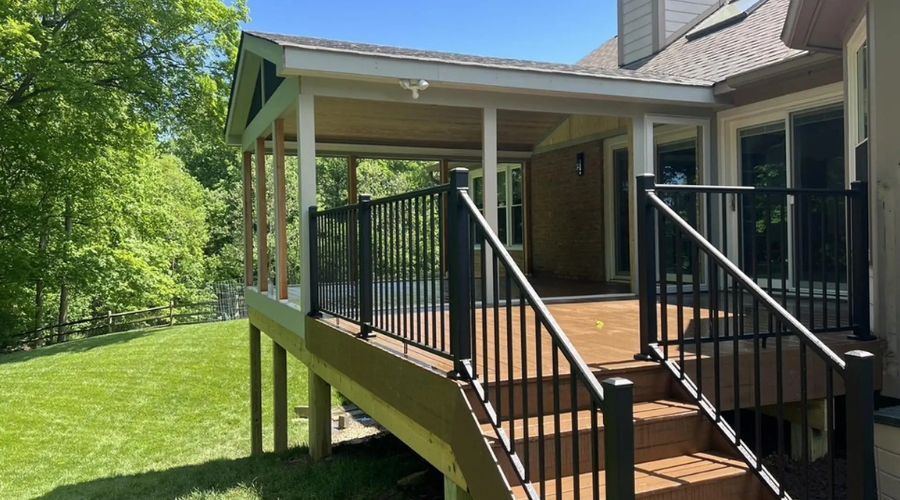
Timing is everything when you build in North Dakota. Our calendar revolves around the winter snow and the annual freeze-up. Once the ground freezes solid in late autumn, digging five-foot holes becomes nearly impossible without specialized industrial heating equipment.
Smart homeowners plan their backyard projects well before the winter freeze-up arrives. Spring and early summer builds are ideal, especially if you are hosting family gatherings for high school graduations or 4th of July barbecues.
Getting your footings poured during the warmer months gives the concrete ample time to cure properly before the severe cold returns. You can learn more about local inspection rules and paperwork by checking out the Fargo deck permits page.
Frequently Asked Questions
Can I dig my deck footings only four feet deep in Horace or Moorhead?
Digging four feet is risky in our region. Local building standards typically require depths between 54 and 60 inches to safely get below the frost line in clay soil. Spending the extra time to dig down five feet protects your investment from severe frost heave.
Why does my deck sag or lean after every winter?
Leaning or sagging usually happens because a contractor took shortcuts, like pouring shallow footings instead of digging deep holes. When the ground freezes in an open neighborhood like Hampton Place, shallow bases easily shift, bend, and sink in the wet clay.
Do I need a permit to build a deck in Fargo?
Yes, in Fargo and most surrounding areas, a building permit is required for decks that are attached to your home or sit 30 inches or more above the ground. This ensures your footings and framing meet local frost line and safety codes.
Let Our Local Crews Handle Your Next Project
You deserve a backyard deck or porch that stands straight, level, and safe through the worst Midwest blizzards. Do not risk your property value on contractors who take shortcuts by pouring shallow footings or ignoring the Cass County frost line.
At Liberty Fence, our experienced crews focus on exceptional quality and honest customer service. We know the exact soil conditions from Moorhead to West Fargo, and we build every structure to withstand our harsh local climate. Reach out to our friendly team today to schedule your consultation and get your backyard ready for the season. Feel free to contact Liberty Fence right now to discuss your upcoming project!