Blog Post:
BY Liberty Fence Co.
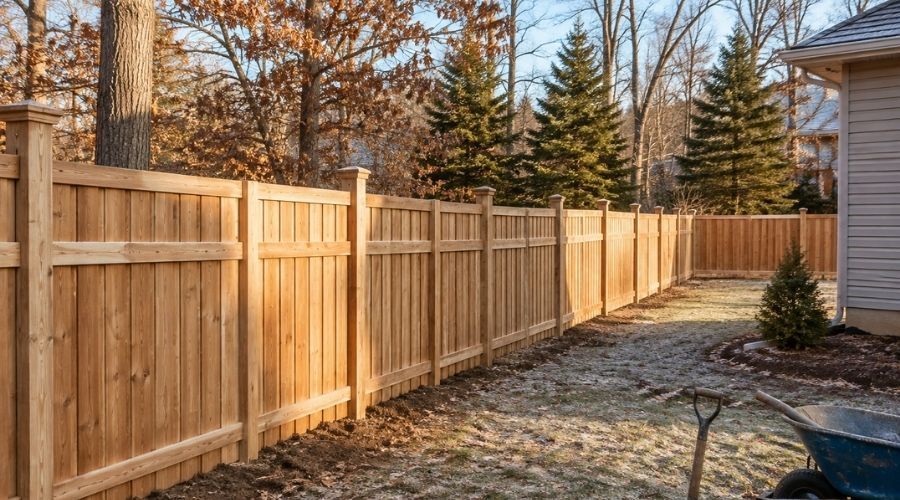
A gate that latched easily in fall can feel different after a Fargo freeze. You may see a raised post, a tilted panel, or a new gap below the fence. Those changes deserve attention, but they do not all have the same cause.
Across Fargo, West Fargo, Horace, and Moorhead, winter brings a mix of frozen ground, snow, and wind. Liberty Fence & Deck Co. identifies wind and post movement among local concerns. Understanding what changed helps you describe the problem and arrange the right assessment.
What frost heave does below the surface
Frost heave is more than a wet patch turning into ice. When soil conditions allow it, water can feed growing ice layers that push the ground upward. The University of Minnesota's heaving explanation describes this ice-lens process. Moisture, soil type, and freezing conditions all influence movement.
The National Weather Service's regional climate records provide context for the Red River Valley's cold seasons. They do not tell you the exact conditions beneath your fence. Two lots on the same street can differ in drainage, fill, exposure, and how water collects near a post.
In a mostly flat Deer Creek or The Wilds yard, watch low areas where meltwater or downspout runoff gathers. Do not assume every brown or clay-like soil behaves identically. A useful repair plan starts with the actual site and the installed foundation.
Build a timeline without disturbing the post
Look for older photos that show how the fence and gate lined up before the change. A picture taken during a family gathering or landscaping project may provide a useful comparison. Record which post or section appears different and when you first noticed it. This gives the assessment a starting point without claiming that a particular weather event caused the damage.
If you can safely take another photo, use a similar viewpoint and include the adjacent panels. A close-up shows the gap, while a wider view shows how the section relates to the rest of the fence. Stay on stable ground, avoid icy areas, and do not clear around or dig beside the foundation just to get a better picture.
Separate the symptom from the cause
| What you notice | What needs checking |
|---|---|
| A post sits higher | Ground movement and foundation condition |
| Gate misses the latch | Post alignment, hinges and gate frame |
| Several panels lean | Wind load, connections and post support |
| Gap appears after thaw | Settlement, drainage and the lower fence line |
A stiff hinge, loose latch, or swollen wood component can also affect a gate. Avoid shaving, cutting, or forcing parts before the source is understood. A temporary adjustment made during frozen conditions may leave a new problem when the ground thaws.
Are driven posts always the problem?
No. Installation method alone does not prove why a fence moved. Post design, embedment, soil conditions, support, and workmanship all matter. A driven system designed for one setting cannot be judged by the name alone, and concrete does not make a post immune to ground movement.
Our team emphasizes installation quality, and we use concrete-set posts. That tells you our approach, not a guarantee that every concrete foundation performs the same way. Ask how the proposed installation addresses your property's ground and drainage conditions.
Ask what the proposed repair is meant to solve
A repair discussion should separate making the gate close from understanding why its alignment changed. Ask which observations point to the post, frame, hardware, or surrounding ground. If the cause is still uncertain, ask what further assessment is needed before a permanent change is chosen. You should not have to diagnose the foundation yourself to understand the next step.
Also discuss the connected sections. Work on one post can involve a gate or adjoining panels, so the proposed approach should account for the whole affected area. Share any known earlier repairs and changes to nearby landscaping. A clear explanation of the problem being addressed is more useful than a promise that one installation method can never move.
Useful steps for a homeowner
- Take clear photos of the full fence line, affected posts, and gate gaps.
- Note when you first saw movement and whether it followed a freeze, thaw, or wind event.
- Look for runoff or standing water nearby without digging around the foundation.
- Keep heavy snow piles and stored materials from pressing against fence panels.
- Keep pets away from new gaps and stop using an unstable gate until it is assessed.
For a home in Lost River or another growing area of Horace, share what you know about recent grading or landscaping. That history may help our Fargo–Moorhead team understand a change. It should not be used to assign blame without inspecting the fence.
Early notes are useful even when a full repair must wait for suitable conditions. Keep the area safe and ask which observations would help the visit. Do not try to drive a lifted post back down or dismantle a loaded section on your own.
Keep useful records as conditions change
Keep your photos, dates, and repair notes together. If the gate begins closing again after a thaw, record that too, but do not treat improved movement as proof that the support is sound. Share the change with the person assessing the fence and follow their guidance on whether it can be used.
After any repair, ask what to watch for and whom to contact if movement returns. Continue to keep the fence line clear of heavy stored materials and report changes in nearby drainage. Those observations support future decisions without requiring you to disturb the foundation.
Frequently Asked Questions
Will a raised fence post settle back after thaw?
It may move again, but it may not return to its old position. Have the post and connected sections assessed before assuming the problem has resolved.
Does a sticking gate prove frost heave?
No. Hinges, latch hardware, the gate frame, and post alignment can each contribute. The cause needs to be checked before repairs are chosen.
Do concrete-set posts prevent all winter movement?
No installation method removes every risk. Foundation design, drainage, soil, installation quality, and fence loads all affect performance.
Get a clear plan for your fence
If winter movement is affecting your Fargo-area fence, request a fence assessment from Liberty. Share your photos and the timeline of the change so we can review the affected posts, gate, and surrounding conditions together.